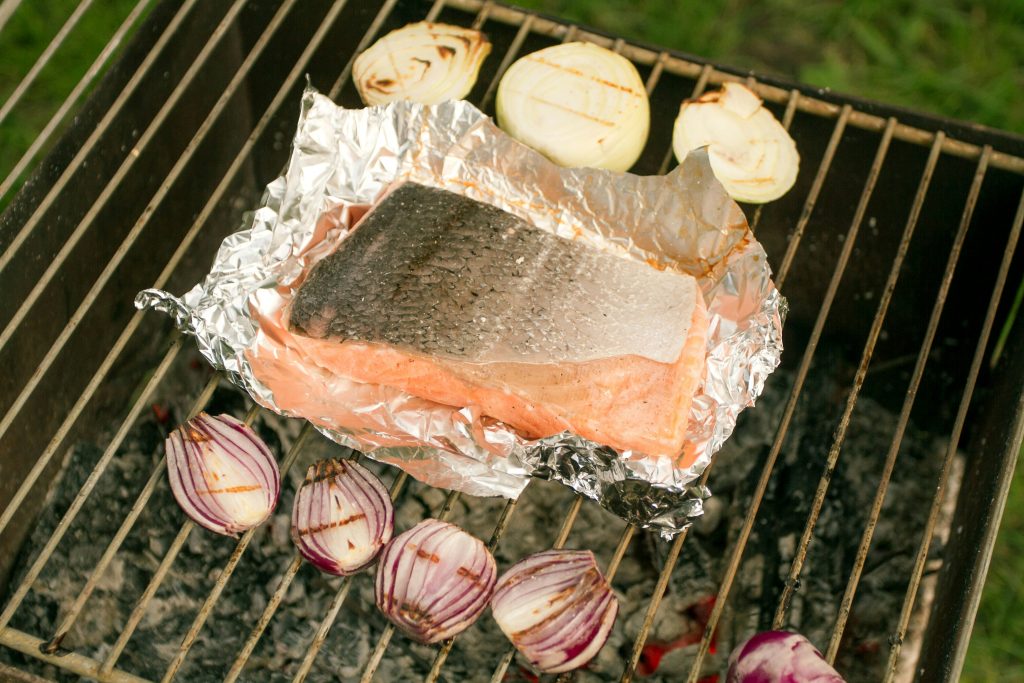
New to pescetarian cooking? Welcome. Here’s the honest truth: fish is one of the most beginner-friendly proteins you can work with. It cooks fast, it’s hard to over-complicate, and even a simple preparation tastes great when the fish is fresh. These are the recipes we’d hand to someone cooking fish for the very first time.
Start With These Three Techniques
Before we get to specific recipes, it’s worth knowing that most fish dishes rely on just three basic techniques. Master these and you can cook almost anything:
- Pan-searing: Hot pan, a little oil, fish goes in and mostly stays put until it’s ready to flip. Don’t move it constantly.
- Baking: Season the fish, put it in the oven, set a timer. Genuinely difficult to ruin.
- Poaching: Simmer liquid (water, stock, milk), add fish, cook gently. Great for delicate fish.
Recipe 1: Baked Salmon with Lemon and Dill (The Perfect Starter Recipe)
Why it’s great for beginners
Baking is forgiving. There’s no timing a flip or managing heat on a hob — you season it, put it in the oven, and it’s ready in 15 minutes. Salmon is also robust enough to handle slight over or undercooking without disaster.
How to make it
- Preheat oven to 200°C
- Place salmon fillets on a lined baking tray
- Drizzle with olive oil, season with salt and pepper
- Lay lemon slices on top with fresh dill sprigs
- Bake for 12-15 minutes until the fish flakes easily with a fork
- Serve with new potatoes and whatever green vegetable you fancy
Recipe 2: Prawn Stir-Fry (The Fastest Dinner You’ll Ever Make)
Why it’s great for beginners
Prawns are almost impossible to mess up and they cook in minutes. Stir-fries teach you to work quickly and confidently with heat — a useful skill that transfers to all kinds of cooking.
How to make it
- Cook noodles according to packet instructions and set aside
- Heat a wok or large frying pan until very hot
- Add a splash of oil, then defrosted prawns
- After 2 minutes, add a crushed garlic clove and a teaspoon of grated ginger
- Add your noodles, a splash of soy sauce, and a drizzle of sesame oil
- Toss everything together for 2 minutes
- Finish with a squeeze of lime and sliced spring onions
Recipe 3: Tinned Tuna Pasta (Your Emergency Weeknight Dinner)
Why it’s great for beginners
No fresh fish required. This is a pantry recipe — everything comes from tins and packets you should have on hand at all times. It’s also endlessly adaptable.
How to make it
- Cook pasta in well-salted water
- While it cooks, drain a tin of tuna and mix with a spoonful of mayonnaise, a squeeze of lemon, capers if you have them, and black pepper
- Drain pasta, reserving a cup of pasta water
- Toss pasta with the tuna mixture, loosening with pasta water as needed
- Optional: add cherry tomatoes, rocket, or olives
Common Beginner Mistakes (and How to Avoid Them)
- Cooking fish straight from the fridge: Take it out 10-15 minutes before cooking so it reaches room temperature — it’ll cook more evenly.
- Moving fish too much: When pan-searing, leave it alone. It will tell you when it’s ready to flip by releasing from the pan naturally.
- Overcooking: Fish cooks much faster than meat. When in doubt, take it off the heat slightly early — it will continue cooking from residual heat.
- Under-seasoning: Fish needs a generous amount of salt. Don’t be shy.
- Buying fish that isn’t fresh: Fresh fish should smell like the sea, not ‘fishy’. If it smells strong, don’t buy it.
That’s really all you need to know to start. Pick one of these recipes tonight, make it, and you’ll be surprised how easy and rewarding pescetarian cooking is from day one.